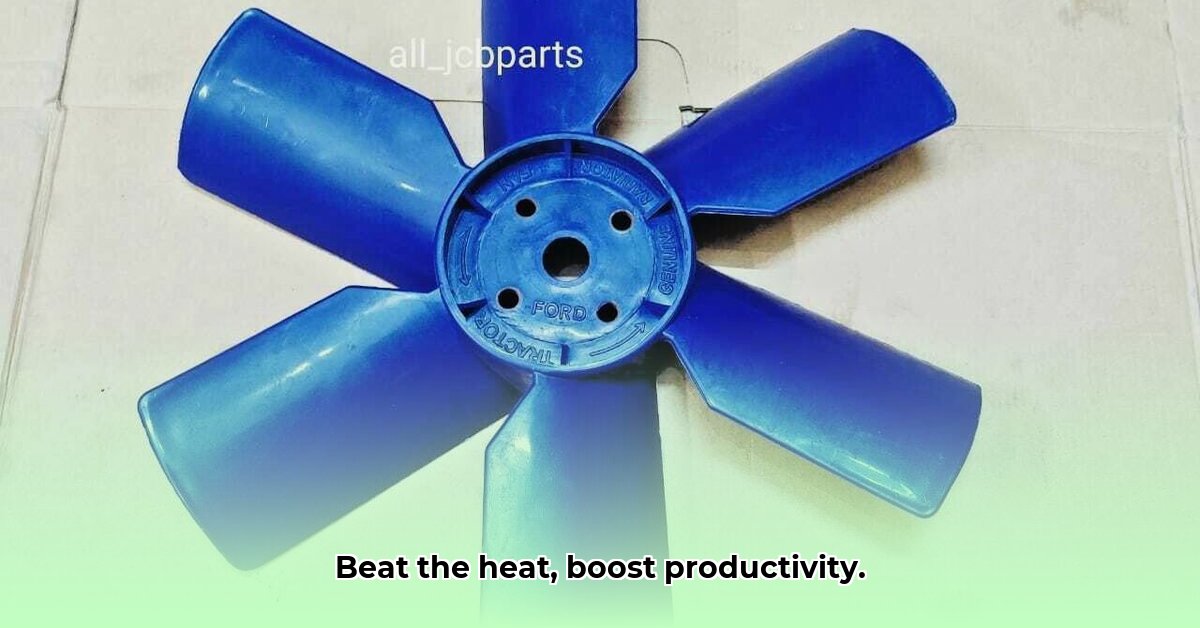
Fan for Tractor: Keeping Cool in the Cab
Working long hours in a tractor cab during summer can be dangerously hot and uncomfortable. Heatstroke is a serious risk, making the choice of a proper cooling system crucial for both comfort and safety. This guide will help you understand your cooling needs, explore various tractor cooling systems, choose the right fan, install it safely, and maintain it for peak performance. For more options, check out our tractor cooling fan guide.
Understanding Your Cooling Needs: More Than Just a Breeze
Before buying a tractor fan, consider your specific needs. What's your budget? What are the typical temperatures you work in? How many hours a day are you in the tractor? Do you need a gentle breeze or powerful cooling, perhaps even air conditioning? Answering these questions will help you narrow your choices. For example, a farmer working 12-hour days in consistently high temperatures will need far more cooling power than someone working shorter shifts in milder conditions.
Types of Tractor Cooling Systems: From Simple to Sophisticated
Several options exist to combat heat in your tractor cab. This guide focuses primarily on fans, a common and often affordable first step.
Standalone Fans: These fans, typically mounted to your tractor's ROPS (Roll-Over Protective Structure), are inexpensive and easy to install. They offer air circulation but don't significantly lower the cab's temperature. Think of them as a helpful breeze rather than a complete solution to the heat.
Integrated Factory Systems: Some tractors offer built-in cooling systems, usually with more powerful fans and better airflow. These systems, while more costly upfront, provide superior cooling and integration.
Canopy Systems: Systems like CoolTops combine a canopy with a down-draft fan for superior heat dissipation. These offer effective cooling but represent a more significant investment. Have you considered the long-term cost savings of improved operator comfort and productivity?
Choosing the Right Fan: Key Factors to Consider
Selecting the ideal tractor fan requires careful consideration. The following factors will help you make an informed choice:
| Factor | Description | Considerations |
|---|---|---|
| Fan Size & Power | Larger fans move more air. Consider cab size and typical temperatures. A large fan in a small cab might be excessive. | Match power to your need. Overpowering a system may cause issues with your tractor's electrical system. |
| Mounting Options | Ensure compatibility with your tractor's roll bar or mounting points. Secure mounting is paramount. | Carefully read installation manuals. Double-check measurements to prevent damage. |
| Power Source | 12V or 24V? The fan must match your tractor's electrical system. | Incorrect voltage can damage the fan. Verify compatibility before purchasing. |
| Noise Levels | Consider noise tolerance. Some fans are quieter than others. | Account for potential noise impacts on neighbors or sensitive individuals. |
| Durability | Look for a robust build to withstand tough farm conditions. | Prioritize weather-resistant materials and reliable components. |
| Price | Compare cost against benefits. A higher upfront cost might mean better performance and longevity. | A cheaper fan needing frequent repairs could be more expensive in the long run. |
Installing a Standalone Fan: A Step-by-Step Guide
Installing a standalone fan is usually straightforward. Follow these steps:
- Find the Ideal Spot: Select a strong, stable mounting point on your tractor's ROPS that won't interfere with operation.
- Secure the Bracket: Use appropriate fasteners to mount the fan's bracket securely. Always follow the manufacturer's instructions precisely.
- Wiring: Connect the fan's wires to your tractor's battery or a suitable power source. Use correct wire gauge and connectors. Double-check connections before powering on.
- Test: Operate the fan, checking for proper function, secure mounting, and the absence of odd noises. Address any issues immediately.
Keeping Your Fan Running Smoothly: Maintenance is Key
Regular maintenance extends your fan's lifespan and efficiency:
- Clean Regularly: Remove dust and debris from fan blades.
- Inspect Wiring: Check for damage or wear.
- Replace Worn Parts: Replace damaged components promptly.
Safety First: Prioritize Safe Operation
Always follow manufacturer instructions. Never use a damaged fan. Ensure secure mounting before operation. Your safety is paramount.
How to Choose the Best Tractor Cab Cooling System for Hot Climates
Key Takeaways:
- Excessive heat poses serious risks to operator health and productivity.
- Factory-installed air conditioning is optimal but expensive.
- Aftermarket systems offer more affordable alternatives but come with trade-offs.
- Power consumption and installation complexity are significant factors.
- Carefully consider your tractor's electrical system capabilities.
- Choosing the right system depends on your budget, mechanical skills, and tractor specifics.
Understanding the Heat Challenge
Working in a hot tractor cab is dangerous. Heatstroke is a serious threat which can lead to significantly reduced productivity. Choosing the right cooling system is crucial.
Factory vs. Aftermarket Solutions
Factory-installed air conditioning is the best option, providing efficient and reliable cooling. However, it’s expensive. Aftermarket options are more affordable, but may require more mechanical skill to install.
Assessing Your Options: A Practical Guide
Evaluate Your Tractor's Electrical System: Check your alternator's capacity. Some AC units draw significant power (60-80 amps). Upgrading your alternator might be necessary.
Budgeting: Factory systems are significantly more costly than aftermarket alternatives.
Mechanical Skills: Aftermarket systems often require mechanical aptitude. Professional installation adds to the cost.
Cab Design: Cab size and shape influence system effectiveness.
Consider the Climate: The intensity of the heat will determine the needed cooling capacity. In extremely hot regions, a factory system may be more crucial.
Aftermarket System Considerations: Pros and Cons
| System Type | Pros | Cons |
|---|---|---|
| 12V Mini-Split Units | Relatively compact and readily available. | High power draw, complex installation, potentially less efficient. |
| Modified Automotive AC | Potentially cost-effective if parts are readily available. | Requires significant adaptation; integration and reliability can be problematic. |
| 120V Inverter-Based | Lower power draw than 12V, can use existing household power. | Requires 120V supply, inverter cost & efficiency are factors. |
Making the Right Choice: A Summary
Choosing the best tractor cab cooling system depends on your individual needs and limitations. Factory-installed systems are most effective but expensive, while aftermarket systems offer affordability but may present challenges in installation and efficiency. Thorough consideration of these factors will help you make the most appropriate choice for your circumstances.